
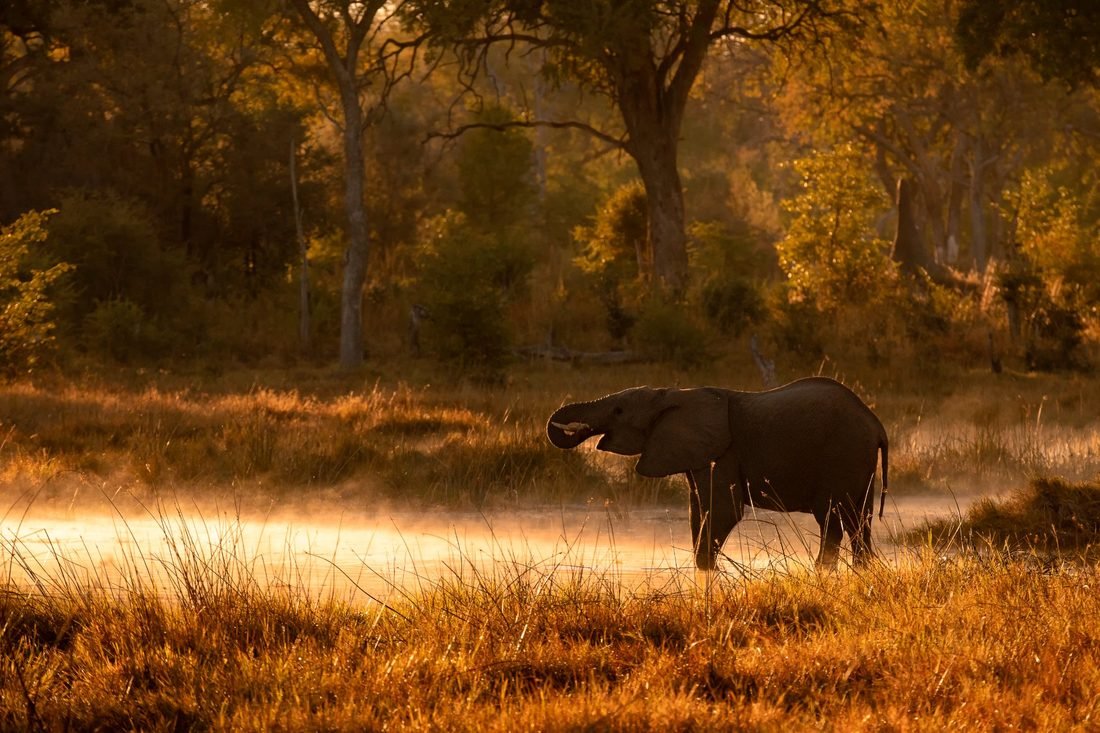
A Linyanti elephant safari is not built around a single dramatic sighting. It is the experience of living alongside a landscape that elephants shape: a sandy track pressed with fresh round tracks at dawn, mopane branches snapping beyond camp after dark, a family group moving steadily toward water with trunks lifted into the wind. In northern Botswana, the scale of the herds can be extraordinary. The privilege lies in meeting them with time, space, and respect.
Linyanti rewards travellers who are willing to slow down. This is not a destination for ticking off a list before breakfast. It is for watching the smallest calf find its footing at a riverbank, noticing how an older cow pauses before leading her family across an open channel, and understanding why a skilled Safari Guide sometimes chooses to wait rather than move closer.
Why Linyanti is made for elephant encounters
The Linyanti region sits within one of Botswana’s great northern wildlife corridors, where river systems, woodland, floodplains, and seasonal water shape the movement of animals. Elephants travel through this country in family groups and larger aggregations, feeding in mopane woodland, resting in shade, and returning to dependable water as dry-season conditions tighten.
That variety of habitat is part of what makes the experience so absorbing. One drive may reveal elephants emerging from dense woodland in near silence. Later, a broad view over water can hold scattered groups at different distances: cows and calves at the edge, bulls standing apart, young elephants testing one another with clumsy confidence.
The region’s remoteness matters as much as its wildlife. A well-designed safari gives each encounter room to unfold without pressure. Rather than rushing between vehicles or chasing a moment, guests can sit with the scene and let the elephants set the pace. That sense of privacy is especially meaningful for couples, families, and returning safari travellers who have learned that the finest sightings are rarely hurried.
The best time for a Linyanti elephant safari
For many travellers, the dry season offers the clearest concentration of elephant activity. As surface water becomes less widespread, animals are increasingly drawn toward permanent water sources and familiar travel routes. From roughly July through October, the landscape often feels more open, vegetation is less dense, and long stretches near water can produce memorable viewing.
Yet there is no single perfect month for every traveller. Late dry season can bring the greatest sense of abundance, with dust in the air and elephant herds gathering near water. It can also be hotter, drier, and more visibly intense. Earlier dry-season months may feel greener and cooler, with excellent wildlife movement but less predictability around specific water points.
The green season has its own appeal. Rain changes the mood of Linyanti, softening the dust and renewing the grasslands. Elephant sightings remain possible, but animals can disperse more widely as temporary water becomes available. For photographers, birders, and guests who prefer dramatic skies and a quieter visual palette, this can be a compelling trade-off.
Wildlife never reads a calendar. Rainfall patterns, water levels, food availability, and elephant movement all influence what a particular week will bring. The right approach is to choose the season that fits your priorities, then give yourself enough nights to let the wilderness surprise you.
What a respectful encounter looks like
Elephants are highly intelligent, socially complex, and alert to what happens around them. A close sighting is not automatically a better one. The best Safari Guides read posture, movement, wind direction, and the behavior of the entire group before deciding how to position a vehicle or whether to remain still.
A relaxed herd often continues feeding, dusting, drinking, or interacting while guests observe quietly. You may see ears held loosely, trunks moving through grass, calves sheltering between adults, or a matriarch calmly assessing the scene. By contrast, tightly bunched animals, repeated head-shaking, abrupt changes in direction, or persistent attention toward a vehicle can signal that more space is needed.
This is where exceptional guiding becomes central to the safari. A Safari Guide is not there to force proximity. They interpret the moment, explain what is happening, and protect the conditions that make genuine behavior possible. Often, patience delivers more than pursuit: a bull crosses in front of the vehicle, a calf splashes into water, or a family group chooses to come closer on its own terms.
For families travelling with younger adults or older relatives, that thoughtful pace has another benefit. It makes the encounter feel inclusive rather than overwhelming. There is time to ask questions, absorb the scene, and understand that the elephant in front of you is part of a much larger living system.
Choosing the right rhythm for your safari
A strong Linyanti itinerary leaves room for early mornings and late afternoons, when temperatures are gentler and animal activity often gathers momentum. Midday is not simply downtime. In elephant country, it can be a chance to watch a bull in the shade, hear branches breaking near camp, or enjoy the stillness before the day cools again.
A few unhurried nights are more valuable than a fast circuit through many regions. Elephants may be everywhere one day and harder to find the next. Staying long enough allows your Safari Guide to follow recent tracks, return to a productive area at a different hour, and make decisions based on what the bush is doing rather than what an itinerary promises.
Camp size also changes the character of the experience. Intimate camps create quieter departures, more personal conversations with Safari Guides, and the flexibility to shape each day around guests’ interests. For honeymooners, that can mean lingering over an evening encounter. For multigenerational families, it can mean balancing wildlife time with rest, comfort, and individual energy levels.
Travellers should also think practically about access and pacing. Flights and transfers are part of reaching a remote wilderness, not an interruption to it. Depending on the journey, guests may travel via Saile Airstrip before continuing into the Linyanti landscape. Build in enough time at either end of the safari so the journey begins and ends without a scramble.
Beyond the herd: the wider Linyanti story
Elephants command attention, but they are not the whole story. Their presence changes the habitat around them. They open paths through thickets, spread seeds over long distances, alter woodland structure, and create opportunities that other species use. A broken branch can become food for smaller browsers. An elephant-dug water source can benefit birds and other animals. Even their tracks leave a record of movement across the sand.
This is why a Linyanti elephant safari is also a lesson in ecological relationships. Look beyond the largest animal in the frame. Watch oxpeckers working along a bull’s hide, a kingfisher holding still above a channel, or smaller antelope stepping into the same open area after elephants have passed through. The wilderness becomes richer when it is read as a connected whole.
Conservation is inseparable from that experience. Botswana’s wildlife landscapes depend on protected habitat, functioning migration routes, responsible tourism, and the expertise of people who know these places intimately. Choosing a locally owned safari experience helps keep value connected to Botswana while supporting the long-term care that remote ecosystems require.
Untamed Places is preparing Untamed Camp Linyanti to welcome its first guests, with the small-scale, locally rooted approach that defines its Botswana collection. The aim is not to place luxury between guests and the wild, but to offer thoughtful comfort after days spent fully present in it.
Pack curiosity, not expectations
Bring neutral clothing, sun protection, binoculars, and a camera if photography matters to you. More importantly, bring patience. Some of the most enduring elephant moments arrive when no one is trying to manufacture them: the low rumble of a herd after sunset, footprints appearing outside camp by morning, or a matriarch leading her family into view just as the light begins to fade.
Plan for the season you prefer, leave room in the itinerary, and trust the measured judgment of your Safari Guide. In Linyanti, the most powerful encounters often begin with the decision to be still.